Reverse Phone Lookup: How to Find Out Who Really Called
Reverse phone lookup names a caller better for landlines and businesses than for cell numbers. What is free, what is a scam, and what is legal under the FCRA.
On this page 7 sections
- What reverse phone lookup actually tells you
- Landlines and businesses resolve, cell numbers fight you
- Free methods to try first, in order
- Paid people-search sites: what you are really buying
- Spoofing: why the number on your screen may be a lie
- When it is legal, and when it crosses a line
- Red flags: the “any number, instant owner” scam
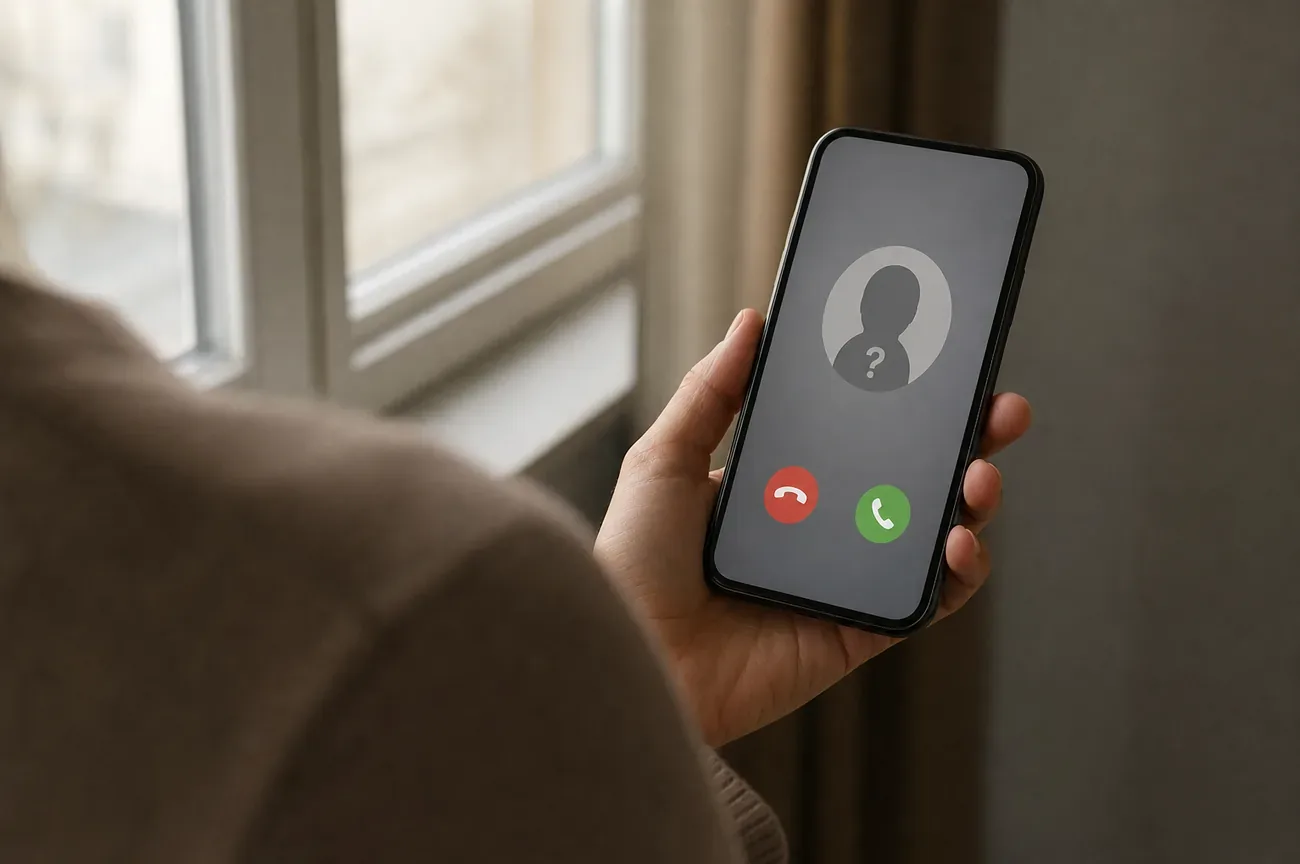
Your phone rings from a number you do not recognize. Maybe it is a missed call you want to return, a number that has called three times today, or a text from someone claiming to be your bank. The question is the same: who is actually on the other end.
Reverse phone lookup is the tool for that question, and it works far better than most articles admit for some numbers and far worse for others. Landlines and business lines usually resolve to a name. Cell numbers usually do not. Below is what each method actually returns, which free options to try first, how to spot the scam sites, and where the legal line sits under the Fair Credit Reporting Act and FTC rules.
TL;DR
- Free first. Google the number in quotes, then Truecaller, then your carrier’s spam tool.
- Landlines and businesses resolve well. Cell numbers resolve 20 to 40 percent of the time, often with stale data.
- Spoofed numbers cannot be traced by lookup. The number on screen is fake.
- “Real-time location from a number” is always a scam. A number is not a tracker.
What reverse phone lookup actually tells you
A reverse phone lookup runs a number backward: instead of starting with a name to find a number, you start with the number to find the name behind it. What comes back depends entirely on where that data was ever recorded.
Three things are almost always available for free, because they are baked into how the phone network works:
- The area code region. A 312 number maps to Chicago, a 213 number to Los Angeles. This is geography of where the number was issued, not where the phone is now.
- The line type. Tools can usually tell a landline from a mobile from a VoIP number like Google Voice.
- The carrier. Verizon, AT&T, T-Mobile, or an MVNO such as Mint or Visible.
Beyond that, accuracy drops fast. A name attaches reliably to landlines and registered businesses. For a personal cell number, the honest answer is that the data often does not exist in any database you can legally reach.
Landlines and businesses resolve, cell numbers fight you
This split is the single most important thing to understand, and it explains why your lookup nailed your dentist’s office but returned nothing for the unknown mobile.
Until the late 1990s, almost every landline appeared in a printed phone book or the 411 directory. Those listings became the seed data for every online lookup site, and they still feed paid databases today. Carriers also populate the CNAM system (Caller Name Delivery), the database your caller ID reads to show a name. Businesses pay to register a clean CNAM entry, which is why a legitimate company’s name pops up instantly.
Mobile numbers were carved out of those public directories from the start. Wireless carriers do not publish subscriber data and will not share it without a subpoena, court order, or law enforcement request. So when a site shows you a name for a cell number, it came from somewhere indirect: a leaked marketing list, a self-submitted social profile, a court filing, or an inference from a relative who shares a billing address. According to the way the directory data was structured for two decades, your dentist’s landline is searchable and your cousin’s iPhone is not. That is not a bug in the tool.
Free methods to try first, in order
Before paying any site, run these. They cost nothing and often beat a 30-dollar report.
- Google the number in quotes. Search
"+1-555-123-4567"and the bare digits. If the number sits on a business listing, a personal site, an old classified ad, or a cached profile, the search surfaces it. This is the highest-yield free step for unknown callers. - Truecaller. A crowdsourced caller ID app where users flag and name numbers. It is strong for telemarketers, robocalls, and repeat spam, weaker for a private individual. The label “Scam Likely” from millions of reports is worth more than any paid report’s confidence score.
- Your carrier’s spam tool. Verizon Call Filter, AT&T ActiveArmor, and T-Mobile Scam Shield label or block suspected spam at the network level, before your phone even rings. Most are free in a basic tier.
- Search the number on the platform it texted from. If a number messaged you on WhatsApp, adding it as a contact may show a profile photo and confirm it is a real, active line. What WhatsApp does and does not reveal about a number is covered separately.
- Check it against the FTC and FCC. The FTC’s Do Not Call complaint data and the FCC’s robocall advisories list numbers tied to active scam campaigns.
These give context. They confirm whether a number is real, whether it is flagged spam, and what region it claims. That is usually all you need to decide whether to call back.

Paid people-search sites: what you are really buying
The big US people-search services are Whitepages, Spokeo, BeenVerified, and a cluster of free mirrors like TruePeopleSearch and FastPeopleSearch. They all aggregate from the same general pool: public records, voter rolls where state law allows, court records, archived directories, self-submitted data, and feeds bought from data brokers.
The free tier shows a teaser: carrier, city, sometimes a first name. To unlock a possible full name, relatives, or age, you pay, usually $5 to $30 a month or per report.
| Service | Free tier | Paid tier | Best for |
|---|---|---|---|
| Whitepages | Carrier, city, name fragment | $4.99 to $29.99/month | Landlines, US homeowners |
| Spokeo | Name, social profile hits | $14.95/month | Cross-referenced social data |
| BeenVerified | Mostly paywalled | $26.89/month | Background-style reports |
| TruePeopleSearch | Free name and relatives attempt | Free | Quick checks, less reliable |
Paid does not mean accurate. The same number can return three different names across three services because each pulled from a different broker on a different date. For a cell number tied to someone who has moved or opted out, you will often pay for a report that says little more than the free tier did. Treat every result as a lead, not a fact. If your real goal is an address rather than a name, finding an address from a phone number explains why mobile numbers usually come up short there too.
Spoofing: why the number on your screen may be a lie
Here is the wall that defeats reverse lookup more than any other: caller ID spoofing. Modern calling systems let anyone display any number they choose. A scammer in another country can show a number with your own area code and prefix, a trick called “neighbor spoofing” that makes you more likely to answer.
When the displayed number is spoofed, a reverse lookup tells you nothing useful, because you are looking up a number the caller never owned. You might “trace” it to a real person in your town who has no idea their number was borrowed for a scam campaign. Those people often get angry callbacks meant for the scammer.
Three rules when spoofing is likely:
- Do not call back an unknown number that left no legitimate voicemail. Returning a one-ring international call (“wangiri” fraud) can route you to a premium line that bills by the minute.
- Do not trust matching area codes. A call that looks local is the oldest spoofing trick there is.
- Report it at reportfraud.ftc.gov, then block and move on. Your carrier’s filter learns from blocks.
When it is legal, and when it crosses a line
Reverse lookup for personal curiosity is legal in the United States. You can look up a number that called you, or try to reconnect with someone who gave you their number, without a problem.
The Fair Credit Reporting Act (FCRA), 15 U.S.C. § 1681, draws the firmest line. It restricts using third-party reports on a person to make decisions about employment, credit, insurance, or housing. Every reputable people-search site posts a banner stating its reports are not FCRA-compliant for exactly that reason. Run a number out of curiosity, fine. Use it to screen a job applicant or a tenant without their written consent, and you are exposed to statutory penalties.
State law stacks on top. California’s Consumer Privacy Act (CCPA) lets residents demand deletion from broker databases within 45 days through the Attorney General’s portal at oag.ca.gov/privacy/ccpa. Using lookup data to follow, contact, or locate someone against their wishes can trigger state stalking and harassment statutes regardless of how you obtained the number.
One firm boundary: a phone number is not a location device. A lookup returns a region and a carrier, never a live position. If you need to find a phone you own or a family member who has agreed to share, that runs through consent-based account tools, not a lookup site. How phone location tracking actually works covers the legitimate paths.
Red flags: the “any number, instant owner” scam
If a site promises the full identity and current home address of anyone from any cell number for a flat fee, it is one of three things: a legitimate aggregator overselling to drive subscriptions, an outright scam that charges your card and shows recycled data, or a query-harvesting tool that resells what you searched.
Watch for these signals:
- “100 percent accurate” claims. No public-records aggregator is. Data ages, people move, opt-outs land.
- “Real-time GPS lookup from a number.” Not possible without carrier-level legal access. This is the clearest tell of a scam.
- No opt-out page on the site. Legitimate aggregators publish one because state law requires it.
- A “scanning” animation that ends in a paywall or a chain of affiliate redirects. Nothing was ever searched.
Reverse phone lookup is a triage tool. It names a business, flags a robocall, and confirms whether a number is real before you call back. It is weak for unmasking a private cell number and useless against a spoofed one. The sites that promise otherwise are selling a result that does not exist. When the device’s hardware identity matters more than its number, tracking a phone by IMEI is the right starting point.
Questions & answers
Things readers ask about this
6 questions · updated May 2026