Phone Theft Hotspots: Where, How, and How to Prevent It
Where phones are stolen most in 2026, how the snatch and resale chain actually works, and the prevention checklist that survives travel, commutes, and crowded markets.
On this page 11 sections
- The hotspot snapshot
- United Kingdom: the e-bike crews
- Barcelona, Naples, Paris: the pickpocket capitals
- Latin America: the rising market
- Bangkok: the traffic and market grab
- United States: the financed-device target
- How the resale chain works
- The prevention checklist
- What to do if you see your phone on the map
- When the location reads wrong
- The lesson built into the data
Phone theft is no longer a random street crime. It is a global supply chain. A device snatched on Oxford Street in London is on a freight container to Hong Kong within three days, where a single building in Shenzhen handles thousands of European and American phones a week, according to Trustonic’s 2024 investigation. Understanding the geography helps you avoid being a node in that chain.
The figures cited below come from SquareTrade’s European insurance data, the UK Office for National Statistics Crime Survey, the FBI Uniform Crime Reporting database for US figures, the Trustonic investigation cited above, and reporting from El País, Folha de São Paulo, and the Bangkok Post on local hotspots.
The hotspot snapshot
Where phones are stolen most in 2026
- UK: 39% of all European phone thefts (SquareTrade), +425% since 2021
- Barcelona: 20,000 phones a year, one every 11 minutes
- São Paulo, Mexico City, Buenos Aires: +50% year-on-year fraud surge
- USA: 1.2 million phones stolen in 2022 (FBI/insurance industry data)
- Bangkok: top snatch zones: Chatuchak Market, Khao San Road, motorbike traffic-light grabs
United Kingdom: the e-bike crews
The UK rise is not a quiet trend. Between 2021 and 2025, reported smartphone thefts grew by 425 percent, with London accounting for the majority. The mechanism is e-bikes and electric scooters: a rider speeds up the pavement or the wrong way down a one-way street, snatches a phone from the user’s hand, and is gone before the victim turns around. Oxford Street, Leicester Square, the South Bank, and the Square Mile are the densest hot zones.
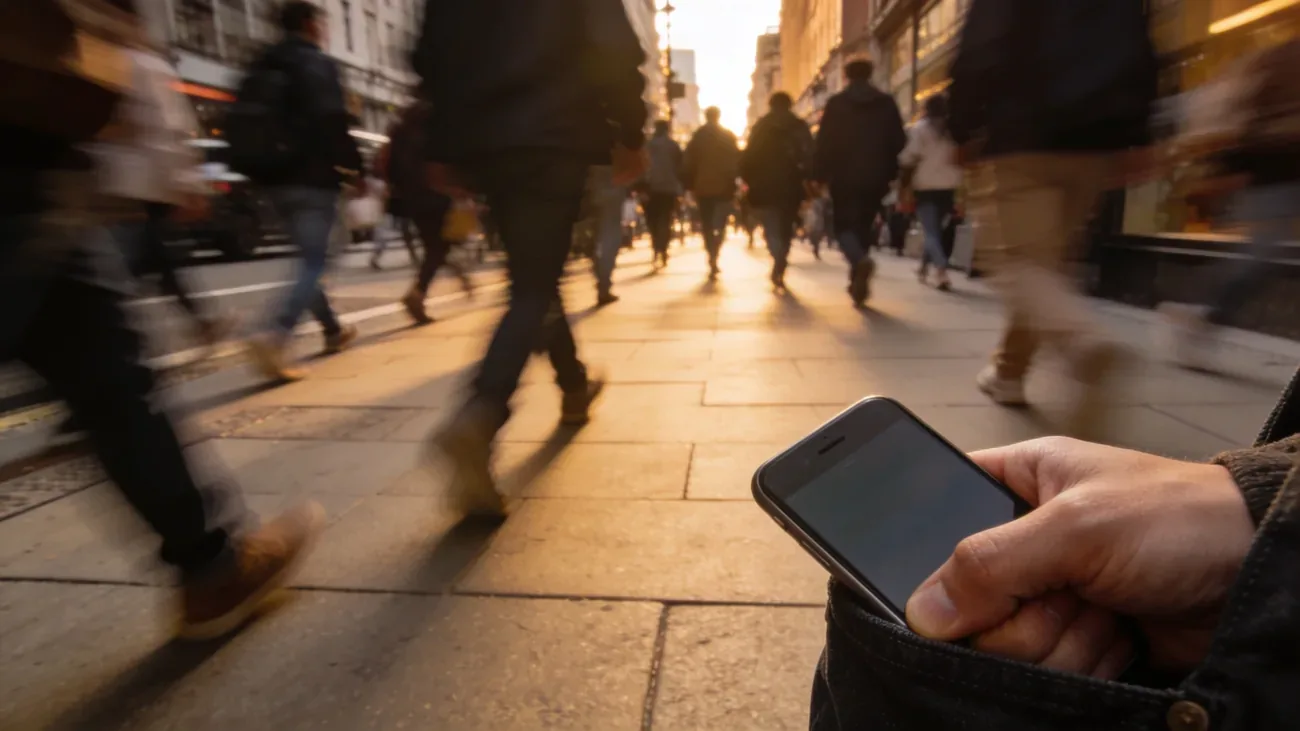
The Metropolitan Police’s Be Switched On campaign specifically targets phone-in-hand walking. The advice that reduces the risk most: keep the phone pocketed when not actively in use, and step into a doorway or against a wall before reading messages, so an approaching e-bike has no clean grab line.
Barcelona, Naples, Paris: the pickpocket capitals
Barcelona records around 20,000 stolen phones a year, which works out to one phone every 11 minutes. La Rambla, the Gothic Quarter, and the metro Line 3 (Liceu, Plaça de Catalunya, Passeig de Gràcia stops) are the densest concentrations. Distraction theft is the dominant style: a “spilled drink,” a fake petition signature, or a fold-out map blocking your view, followed immediately by the lift.
Naples specializes in scooter snatch (the Italian term is scippo) on Via Toledo and around Piazza Garibaldi. Paris pickpocketing concentrates on Metro Line 1 (between Châtelet and Charles de Gaulle-Étoile), the Eiffel Tower queue, and the steps of Sacré-Cœur. Rome and Madrid follow similar patterns on their busiest tourist arteries.
Latin America: the rising market
Comparing Q1 2024 with Q1 2025, Argentina, Colombia, Mexico, and Peru all documented 50 percent more stolen-device fraud cases, according to BioCatch’s LATAM report. The pattern differs from European theft: the goal is often not the phone itself but access to the banking apps it unlocks. Thieves force or trick the victim to unlock the device, then transfer money before the victim can call their bank.
São Paulo and Mexico City have the highest absolute numbers. Bogotá and Lima are growing fastest as a percentage. Buenos Aires concentrates around Recoleta and the metro.
The defensive habit that helps most in this region: enable a separate “panic” PIN inside your banking app (most major LATAM banks now support a duress PIN that opens an empty version of the app), and never store crypto wallet seed phrases as photos.
Bangkok: the traffic and market grab
Bangkok phone theft is largely opportunistic and athletic. Two patterns dominate:
- Motorbike traffic-light snatch. A motorcyclist pulls alongside a stopped car or tuk-tuk, reaches through the open window, takes the phone resting on the dashboard or the passenger’s lap, and accelerates away through traffic. Travel forums warn first-time visitors about this regularly: never leave the phone visible near an open window in slow traffic.
- Crowd grab. Chatuchak Weekend Market and Khao San Road, with their density of farangs (foreigners) and stop-and-go walking pace, are ideal for hand-grab and pocket-pick theft.
Tourist Police can be reached on 1155. They speak English and handle the police report process for foreigners. After the report, take it to your operator (AIS, dtac, or TrueMove H) for the IMEI block. Full process in our stolen phone recovery guide.
United States: the financed-device target
US phone theft trends differently. The 1.2 million phones stolen in 2022 split roughly into urban opportunistic theft (transit, restaurants, parks) and a smaller but growing category of carrier financing fraud: thieves target phones still being paid off through a 24- or 36-month carrier plan, because they can be unlocked and resold faster than a phone purchased outright.
San Francisco, Oakland, Atlanta, and parts of Chicago report the highest urban theft rates. New York Subway has periodic snatch waves on specific lines. Outside cities, the pattern is more dispersed: gym lockers, hotel rooms, and shared workspace desks rather than street snatching.

How the resale chain works
Whatever the country, stolen phones flow through similar channels:
- Local fence (24 to 72 hours). The thief sells to a local pawn shop or back-alley fence for 5 to 15 percent of retail value.
- Aggregator (1 to 3 weeks). A regional aggregator buys hundreds of phones at once for shipment.
- Asian or West African resale market (1 to 3 months). The phones are wiped, jailbroken or sometimes parts-harvested, and sold at street markets or through online classifieds in markets where IMEI blacklists are not enforced.
What breaks this chain is the IMEI blacklist plus Activation Lock (iPhone) or the Android factory reset protection. A blacklisted, locked phone has no resale value as a working device, so it gets parts-harvested instead. The recovery rate is low (about 7 percent UK, 3 percent US) but the deterrent effect is real. Every blocked IMEI raises the risk-to-reward ratio for the next theft.
The prevention checklist
These are the actions that reduce both the probability of theft and the damage if it happens.
Before any trip:
- Verify Find My (iPhone) or Find My Device (Android) is enabled. Turn on the offline finding network in both.
- Note your IMEI in a password manager or written on paper.
- Set a 6-digit PIN minimum. Disable face/fingerprint unlock if you are traveling somewhere with a high robbery rate where forced unlocks happen.
- Enable two-factor authentication via an authenticator app, not SMS, on banking and email.
- Print or screenshot recovery codes for your authenticator app and store them separately from the phone.
On the street and on transit:
- Phone in pocket when not in use, never in hand while walking past intersections or alleys.
- Read messages or maps stepped against a wall, not in the middle of a flow of people.
- Strap or wrist tether for taxi rides and outdoor cafes (fishing line is a real attack vector: hooks fish phones off cafe tables from the open window).
- In motorbike-snatch zones (Bangkok, Naples, Hanoi, Manila), keep the phone away from open windows and below dashboard level when stopped.
At home and in shared spaces:
- Hotel safes for the phone overnight in high-theft cities. Cheap safes can be opened in 30 seconds, but they slow casual thieves.
- Gym lockers: padlock with a 4-digit code, never combination dials with sequential digits.
- Shared workspace desks: never leave the phone face-up on a table you are walking away from, even briefly.
Account hygiene:
- Sign out of unused devices in your Apple ID and Google Account dashboards quarterly.
- Disable lock-screen previews of SMS, banking notifications, and authenticator codes.
- Set up an “in case of emergency” contact and lock-screen message that will help an honest finder return the phone without unlocking it.
What to do if you see your phone on the map
Do not drive there. Do not knock on the door. The location data is evidence, and it is admissible in most jurisdictions for a recovery warrant. Pass it to the police along with the IMEI, the timestamps, and your police report number.
Self-recovery has resulted in injuries and deaths in multiple documented cases in the UK, US, and Brazil. The IMEI block, Activation Lock, and lock-screen passcode already make the phone hard to use. There is no value in confronting the thief that the legal process does not deliver more safely. For the full incident response sequence, see our stolen phone recovery guide.
When the location reads wrong
A common scenario after theft: the Find My or Find My Device map shows the phone at a residential address that obviously is not the thief’s home. The phone has likely been:
- Sold to an unrelated buyer (most common)
- Dropped in a hedge by a thief who realized it had Activation Lock
- Inside a Faraday bag near a Wi-Fi network whose router happens to be in that home
- Mispinned by Wi-Fi positioning to the strongest router in range, sometimes a city block off
This is exactly why you do not act on the map alone. The police can verify the location with subsequent pings and only execute a warrant if the device is consistently stationary at one address with a live signal.
The lesson built into the data
Phone theft is rising globally because the resale market is liquid and IMEI enforcement varies wildly between countries. The single biggest leverage you have as a phone owner is registering the IMEI as stolen on the GSMA database the moment a theft happens. Not after a week of looking, not after the police report sits in someone’s queue, but in the first 30 minutes. The faster the IMEI hits the blacklist, the harder it is for the device to make it past the local fence.
If your phone gets stolen, the 30-minute recovery plan is the procedure. If your phone has not been stolen yet, the prevention checklist above is what makes you a less profitable target than the next person on the street.
Questions & answers
Things readers ask about this
5 questions · updated Apr 2026