Best Bluetooth Tracker for a Cat Collar (AirTag Is Not It)
AirTag weighs 11 grams, has a loud speaker, and risks battery leaks if chewed. Three Bluetooth trackers fit a cat collar better, plus when to skip Bluetooth.
On this page 6 sections
The first answer most people get when they ask about a cat collar tracker is “use an AirTag.” Apple sells AirTag in four-packs for $99, the box is small, the battery lasts a year, and the Find My network covers most of the developed world. On paper, it is the obvious pick.
In practice, AirTag is the wrong pick for a cat for three specific reasons: it is heavier than the alternatives, the speaker is loud enough to stress a small animal, and the CR2032 battery becomes a swallow-and-leak risk if the tag separates from the collar.
TL;DR. AirTag weighs 11 grams. The vet rule of thumb caps collar attachments at 5 percent of body weight, which makes AirTag borderline for any cat under 5 lbs (2.3 kg). For Bluetooth tracking on a cat collar, Pebblebee Clip (7 g, Find My, rechargeable), Tile Sticker (3.5 g, three-year sealed battery), and Chipolo ONE Spot (10 g, Find My, replaceable) are all better fits. For an outdoor cat, Bluetooth is not enough. The answer is a cellular GPS tracker on a harness.
Why AirTag is the wrong pick for cats
The case against AirTag for cats comes from three measurable problems and one design problem.
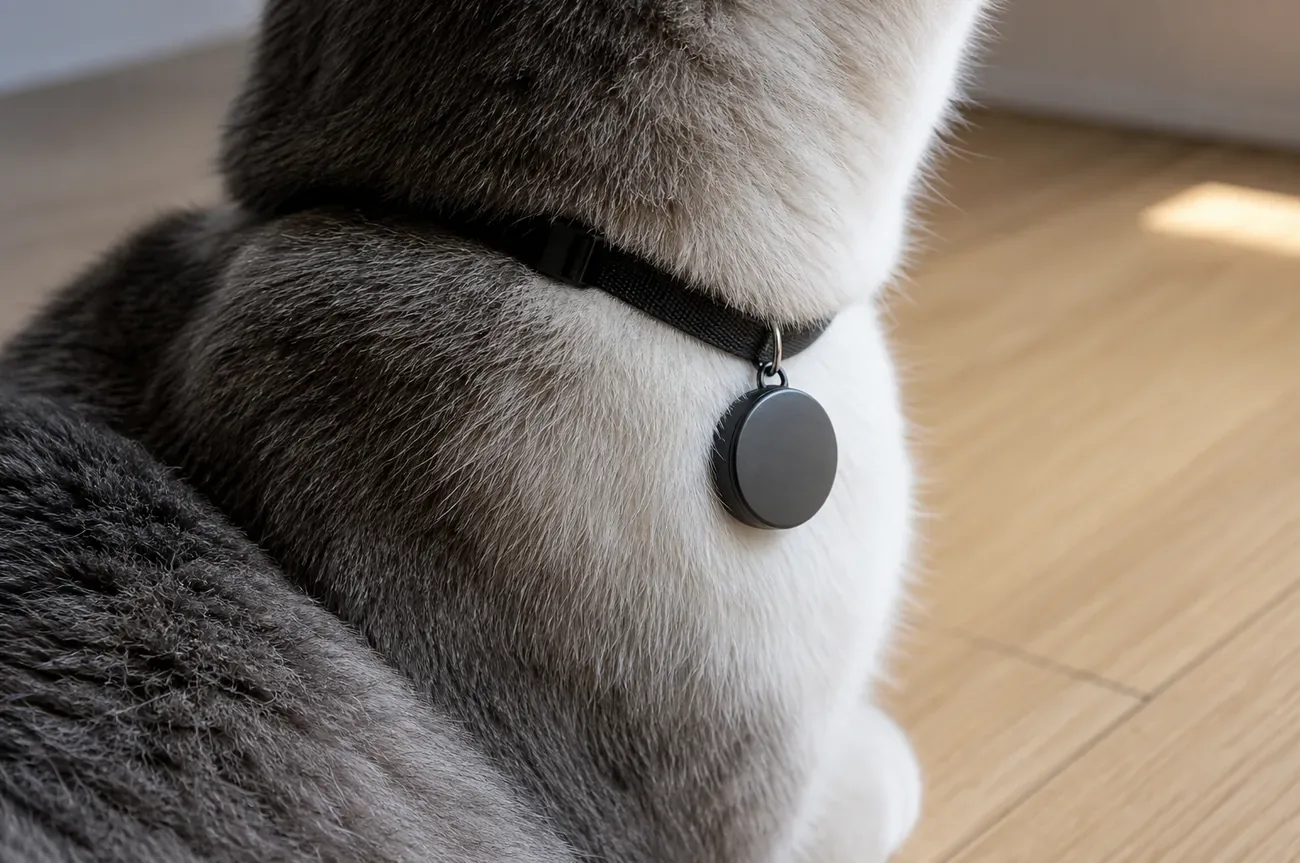
Weight. Apple lists AirTag at 11 grams. A collar plus a holder adds another 5 to 10 grams. Total weight on the neck of an average 8-pound (3.6 kg) house cat sits at 16 to 21 grams, which is at the edge of the 5 percent body-weight rule veterinarians use for collar attachments. For a 4-pound cat or a kitten, AirTag plus holder is over the line.
Speaker volume. AirTag has a built-in piezo speaker designed to be audible across a room. Six inches from a cat’s ear, it is loud. Cat behavior specialists report cats refusing to wear collars after the find-mode sound triggers once.
Swallow and battery-leak risk. AirTag is not designed to stay attached. The standard mounting case clips on with a magnet or a screw cap, and both can fail under the kind of force a cat applies during grooming, climbing, or escaping a tight space. A separated AirTag and a curious cat is a swallowed CR2032 cell. The petcareshed safety review covers veterinarian commentary on the choking and chemical-leak hazards in detail.
Breakaway failure. Cat collars are required to be breakaway, meaning the buckle unclasps under tension to prevent strangulation. Many AirTag holders are bulky enough that they snag before the collar releases, which defeats the breakaway. Dr. Nina Thompkins, a feline behaviorist quoted in the petcareshed review, puts it directly: “Cats are more flexible and agile than dogs, which makes dangling devices especially risky on narrow escapes.”
The 5 percent rule
Veterinary practice has long capped collar attachment weight at 5 percent of body weight. For an average 4 kg (8.8 lb) house cat, that is 200 grams in absolute terms, which sounds generous until you remember the collar itself, the buckle, the ID tag, and the tracker all count toward the budget. A practical working budget for the tracker alone is 8 to 10 grams.
This is why AirTag (11 g) is borderline, Pebblebee Clip (7 g) is comfortable, Tile Sticker (3.5 g) is barely felt, and any cellular GPS tracker (20 to 40 g) is built for larger working cats and dogs, not your average tabby.
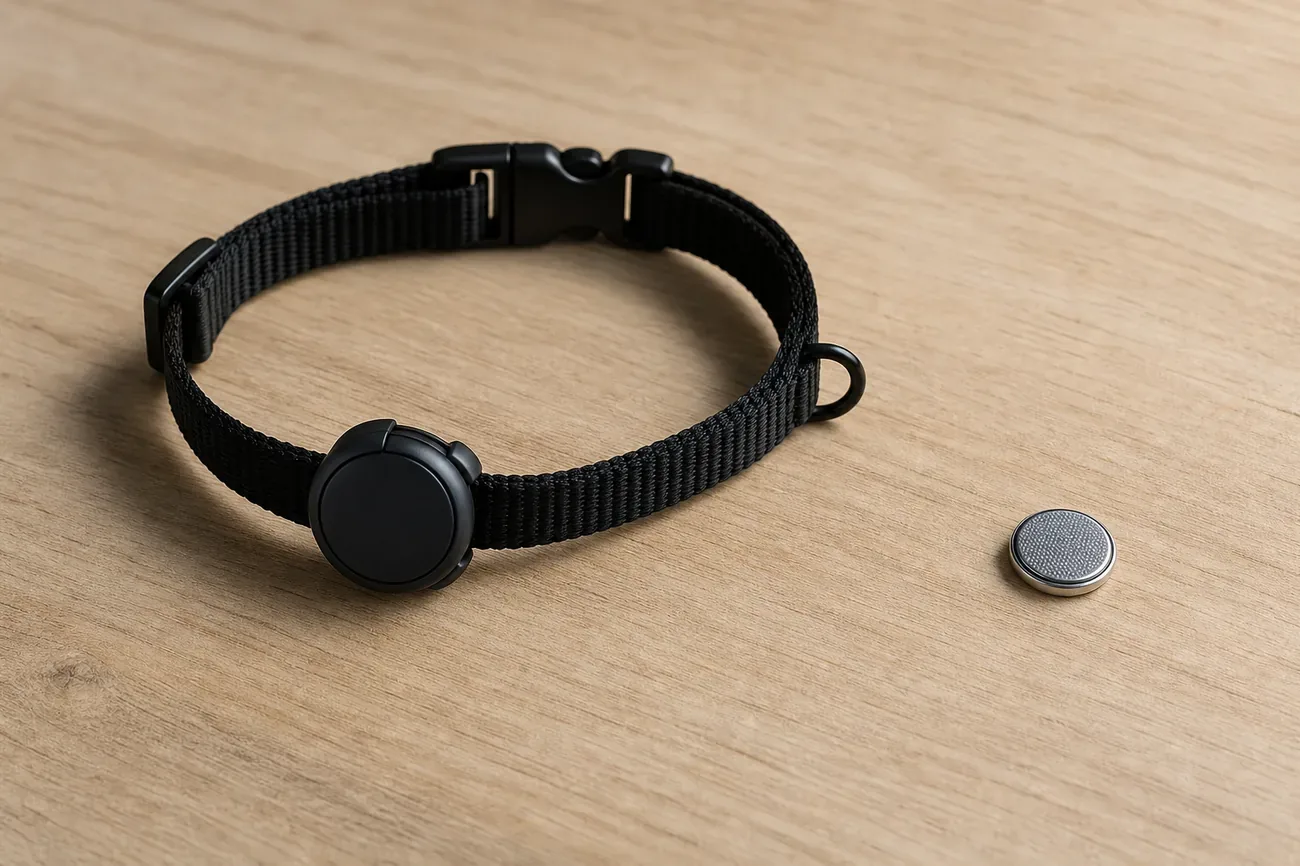
Four trackers that fit a cat collar
| Tracker | Weight | Battery | Network | Price | Best for |
|---|---|---|---|---|---|
| Tile Sticker | 3.5 g | Sealed, 3 yr | Tile (Bluetooth) | $25 | Lightest pick, indoor cats, mixed iPhone-Android homes |
| Pebblebee Clip | 7 g | Rechargeable, 6 mo | Find My or Tile (switchable) | $30 | iPhone households, indoor or fenced yard |
| Chipolo ONE Spot | 10 g | Replaceable CR2032, 1 yr | Find My (Apple only) | $28 | Apple ecosystem, backyard cats |
| Tabcat v2 | 6 g | Replaceable, 1 yr | Dedicated RF (own handheld receiver) | $90 (kit) | Yard cats that go just over the fence |
Three notable gaps from this table. AirTag is excluded for the reasons above. Third-party Find My trackers from Chipolo and Pebblebee are functionally identical to AirTag on the network side but lighter and (in Pebblebee’s case) rechargeable. Tile still runs on Android, which matters in mixed-OS households where one partner is on iPhone and the other on Pixel or Galaxy.
Indoor cat: cheap is fine
If your cat lives entirely inside, the threat model is lost behind furniture or stuck in a closet, not lost across the neighborhood. Any Bluetooth tracker handles this. Tile Sticker or Pebblebee Clip both work without leaving the house, both have apps that ring the tracker, and both cost less than a single vet visit.
The smaller the better. Tile Sticker at 3.5 grams is the lightest tracker on the market that still ranges across an apartment. For a senior cat, an arthritic cat, or any cat under 6 pounds, this is the only Bluetooth pick that disappears on the collar.
Outdoor cat: Bluetooth is not enough
A Bluetooth tracker on an outdoor cat is theater, not insurance. Find My and Tile both rely on another phone walking within 30 to 100 feet of the tracker to relay a position. In a dense city block this works. In a suburb at 3 a.m. when your cat is two streets over chasing a squirrel, there are no phones in range and you get nothing.
For a true outdoor cat, the answer is a cellular GPS tracker like Tractive, Pawfit, or Whistle. These weigh 25 to 40 grams (over the 5 percent line for a small cat), and they cost $4 to $10 a month in subscription, but they actually update position in real time and they keep updating after your neighbors go to bed.
Bluetooth on the collar plus a cellular GPS on a harness for trips outside is the layered setup serious outdoor cat owners build. It is also expensive. Most owners pick one and live with the trade.
The collar matters more than the tracker
Whatever tracker you pick, the collar around it is the more important safety decision. A breakaway buckle is non-negotiable for any cat that goes outside, and a snug fit (two fingers between collar and neck, no more) prevents the tracker from rotating under the chin where the cat can chew it.
If the cat refuses the collar entirely, the tracker is irrelevant. Start with an empty collar, let the cat wear it for a week, then add the tracker. This is the only reliable way to get a cat to accept any neck attachment long-term.
For the broader picture on how the major Bluetooth tracker platforms compare on network, range, and ecosystem, our AirTag vs Tile vs SmartTag vs Chipolo breakdown covers all four in depth. For context on the misuse risks that come with any small tracker (and why AirTag specifically draws scrutiny), our piece on AirTag for tracking people is the companion read.
Questions & answers
Things readers ask about this
7 questions · updated May 2026